Pages

Saturday, 19 May 2012

JOKE OF THE WEEK

THE JOKE - How much does it cost to get married?

SON: How much does it cost to get married, dad? 

FATHER: I don't know. I'm still paying for it...


☺☺☺☺☺☺☺☺☺☺☺☺☺☺☺☺☺☺☺☺☺☺☺☺☺☺☺☺☺☺☺☺☺☺☺☺☺☺☺☺☺☺☺☺

 VOCABULARY

To pay for something = obviously in a literal sense this means to give money in return for a product or service, but we can also use “to pay” in a figurative sense, meaning that you pay for something you have done with personal suffering.

WHY IS IT FUNNY?

The son is asking about the monetary price of a wedding, but the father has answered ironically, implying that he is suffering as a consequence of getting married.

QUESTION - Do you think you will get married some day? Why? Why not?


Retrieved from Woodward English

☺☺☺☺☺☺☺☺☺☺☺☺☺☺☺☺☺☺☺☺☺☺☺☺☺☺☺☺☺☺☺☺☺☺☺☺☺☺☺☺☺☺☺☺


Friday, 18 May 2012

VIRTUAL TOURISM

HOW TO WRITE A DESCRIPTION OF A TOURIST DESTINATION?

When you write about a tourist destination it is important to give reasons why the place is beautiful and unique and why someone would like to go it there. If it has  historical significance (most places have), a little of its history makes it more attractive. 
But when you write about a tourist destination in an internet page, you need to consider some elements to include. For example, the first thing to take into account is the visual design. If a webpage is not visually pleasing, it is quickly turn off. Links are essential; these should link to other pages which will enlarge or clarify the information provided in the page. And last but not least, contact information. If you are offering any kind of sercices and anyone is interested in them, it is advisable to find an easy way to contact you.


Read the following text with about Lisbon  

************************************************************************************************************

Facinating Lisbon

Lisbon, one of the oldest capitals in Europe, is situated on the west coast of Portugal. It has a population of about 570,000 people, but its suburban area increases this number to over two millon. Its rich history, colourful traditions, and more modern attractions, make it a fascinating city to enjoy on holiday.


Lisbon history dates back 300,000 years back and it emerged as a nation state in the early 12th century. As the legend tells, the city is founded and named by Ulysses as Ulissipo or Olissopo, meaning "enchanting port"
.
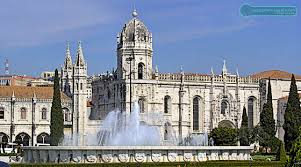
Mosteiro dos Jerónimos

Anyone lucky enough to visit Lisbon will find plenty to see and do. For a start, the magnificent Castle of Saint George is a must. The castle, which is built on a hill, offers a fantastic view over the city. Directly belows is Alfama, the oldest part of Lisbon. Visitors can walk along its narrow streets where they can see fish sellers carrying baskets on their hands. In Belém, the city port, tourists can visit the Mosteiro dos Jerónimos, a beautiful monastery built in the 16th century. Baixa, the busy shopping area of the city, offers a great variety of handmade souvenirs and elegant designer clothes.
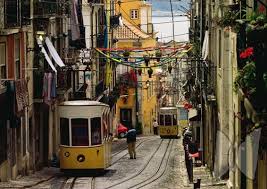

Barrio Alto
Lisbon nightlife is exciting and varied. Visitors can have a coffe in Bairro Alto, the ancient port of the city, where fado - traditional Portuguese music - fills the air with sad, romantic sounds. They can also enjoy delicious seafood at first-class restaurants. And for those who like to dance the night away, there are many trendy clubs in the area.

Lisbon is a wonderful city to go through at least once in your life. If you want to experience the beauty and fascination of a great European capital, it will be the perfect destination for you!

For more information about Lisbon click HERE.


CONTACT US: ALT@VISITLISBON-NOW.COM

************************************************************************************************************
► STRUCTURE

First Paragraph: Introduction
Write the name, location, population, and the reason for choosing the place.

Second Paragrapah: History of the city (optional)
Write when the city was founded, why it is named like that, and important facts about its history.

Third and Fourth Paragraphs: Main Body
Write about surroundings, sights to see, things to do - from general features to details. You can suggest senses (sight, hearing, smell, taste) mood, and atmosphere (dark vegetation enclosing the area, etc.)
Write about entertainment, (cinemas, pubs, bistros, discos, etc.), eating out (clubs, restaurants, bars, etc.)

Fifth Paragraph: Conclusion (closing paragraph)
Make general comments, feelings, and/or recommend the place to visitors (highly recommended, expensive, boring, etc.)


► GENERAL TIPS
✔ We normally use present tenses in this type of writing.
✔ Don't use short forms.
✔ Don't use informal writing (idioms, colloquial language, etc.)


► Adjectives that make the reading more interesting
wonderful, amazing, incredible, magnificent, horrible, huge, tiny, fantastic, enormous, enterntaining, splendid, awful, charming, delicious, beautiful, fascinanting, exciting, delightful, great, interesting, excellent, boring, impressive, peaceful, quiet, noisy, elegant, dirty, busy, etc.
e.g. When you visit Paris, you will marvel at the incredible sight from the Eiffel Tower...


► Useful Phrases
✔...is a city of...                                                     ✔...is situated on/next to...
✔...is surrounded by...                                            ✔...stands...
✔...which atracts tourists...                                     ✔...can be clearly seen from...
✔...you can see the variety of...                              ✔...Further down/up the street...
✔...built in...                                                          ✔...The reason that...is that...
✔...So,...is a place with...                                       ✔...you can (also) enjoy...
✔...what you mostly notice is...                               ✔...also, anyone would like...
✔...All in all, ...is a city...                                        ✔...Dominating the skyline...
✔...you can find examples of a number of...            ✔...you can start/end your day by...
✔...one thing that makes...unique among... is...      ✔...is an ideal place for those who...
✔...the landscape in which it stands is...             
✔...The most noticeable thing in the... is...          
✔...is the oldest/newest part of the city....
✔...is the thing that will impress you most.
✔...Without doubt, the most impressive thing about... is...

► NOW IT'S YOUR TURN!
* WORK IN PAIRS. Choose a tourist place to visit in our country.
* Design your own "internet page". Use the explanation above as a guide. The paragraphs must include:
Paragraph 1: a short description of the city: location, population, some important facts about the city.
Paragraph 2: a very brief history of the city.
Paragraph 3 and 4: Things to see and visit in the place.
Paragraph 5: Conclusion.

Add to your webpage, at least,...
...one conditional sentence of any type. (underline it)
...two links to other pages. Ask to your computer teacher how to do it.
...three photos or pictures. 
...one of the adjectives that make your reading more interesting  in each paragraph. (underline them)
...one useful phrase in each paragraph - except the conclusion (underline them).

► BE CAREFUL!
* Don't make your project too long. The longer the project, the higher the possibilities to make mistakes. Use the example of Fascinating Lisbon as a guide. 
* Read pages 84 to 87 of your textbook to find more examples of this assignment.

Prepare it as a WORD document. Your teacher will tell you what email to send it to.

Saturday, 12 May 2012

JOKE OF THE WEEK

THE JOKE - Bean Soup

CUSTOMER: Waiter, what do you call this soup? 

WAITER: It's bean soup, sir. 

CUSTOMER: I don't care what it's been. What is it now?


☺☺☺☺☺☺☺☺☺☺☺☺☺☺☺☺☺☺☺☺☺☺☺☺☺☺☺☺☺☺☺☺☺☺☺☺☺☺☺☺☺☺☺☺

VOCABULARY

Bean (noun) = a common vegetable
To call (verb) = to name
Soup = cooked food in a liquid form
Been = Past participle of the verb To Be 


WHY IS IT FUNNY?

Been (past participle of To Be) is pronounced the same as bean (the vegetable). The customer thinks the waiter is using the present perfect tense and saying, “It’s (It has) been soup”. In other words, it was soup in the past, but it is something different now. The customer wants to know what it is in the present tense. Really the waiter is saying however, is that “It is bean soup”.


QUESTION: Have you ever had a misunderstanding in a restaurant?


 Retrieved from Woodward English

☺☺☺☺☺☺☺☺☺☺☺☺☺☺☺☺☺☺☺☺☺☺☺☺☺☺☺☺☺☺☺☺☺☺☺☺☺☺☺☺☺☺☺☺

Friday, 11 May 2012

GREAT BRITONS


Who can be considered GREAT BRITONS?


In fact, this is not an easy answer...  English people made a survey to determine who the British people considered the GREATEST BRITISH PEOPLE in history. The pool resulted in many hugely respected figures from Britain past including William Shakespeare, Horatio Nelson, and Charles Darwin.
The long list includes engineers, scientists, royals, writers, military figures, and even more contemporary people like John Lennon and Diana, Princess of Wales.


Now see this Power Point Presentation about some of the most GREAT BRITONS. 

IF YOU WANT TO ENLARGE THIS PPP, CLICK ON THE SLIDESHARE LOGO ON THE LEFT


NOW IT'S YOUR TURN!!


Work in pairs. Who do you consider GREAT ARGENTINIANS? Who do you admire? Prepare a similar PPP including TEN Argentinian people that, in your opinion, must be considered GREAT ARGENTINIANs. Write briefly when they were born and why you consider they must be in your list.  Prepare your project to send it to your teacher by e-mail. The best project will be uploaded to the teacher's blog.


Saturday, 5 May 2012

Conditional II - Unreal Past


Conditional II refers to present or future hypothetical or imaginary situations. It is used when the speaker speculates about a present situation or something that is impossible. Often used to express a wish.

FORMATION
 
(IF Clause)
(Main Clause)
If I won the lottery, I would buy a new house.
or...
(Main Clause)
(IF Clause)
I would buy a new house if I won the lottery.

Note! We never use would, or wouldn't in the if clause.

Examples:
  • If I were you, I wouldn't do that. = I wouldn't do that, if I were you. (I am not you - therefore the condition is unreal).

  • If I had more time, I would do more on my websites. = I would do more on my websites, if I had more time. (I don't have more time - therefore the condition is unreal).

 WERE instead of WAS


In IF Clauses Type II, we usually use WERE – even if the pronoun is I, he, she or it –.

Example: If I were you, I would not do this.

WERE in conditional 2 is a subjuntive form. That is to say,  WERE is used to express an event that is not certain to happen, especially when talking about an event that someone wants to happen, hopes will happen or imagines happening.

Examples:

  • If I found her address, I would send her an invitation.
I would like to send an invitation to a friend. I have looked everywhere for her address, but I cannot find it. So now I think it is rather unlikely that I will eventually find her address.


  • If John had the money, he would buy a Ferrari.
I know John very well and I know that he doesn't have much money, but he loves Ferraris. He would like to own a Ferrari (in his dreams). But I think it is very unlikely that he will have the money to buy one in the near future.

And now... let's practise!! Click on the exercises below and practice conditional II, I, and =


Exercise 7 (to print and hand in)

Fill in the gaps with an appropriate conditional form
  1. If it...........................(be) sunny tomorrow, we...........................(go) to the beach.
  2. If the 8 o'clock bus...........................(arrive) late, I...........................(not-get) to work on time.
  3. If I...........................(be) you, I...........................(learn) to speak English fluently.
  4. If I...........................(win) the lottery, I...........................(leave) my job. 
  5. If I...........................(go) to that restaurant, I...........................(tell) you what it's like.
  6. If I...........................(find) an envelope with a lot of money in it in the street, I...........................(take) it to the nearest police station.
  7. If you...........................(boil) water, it...........................(evaporate).
  8. If Heather ...........................(help) me with my homework, I...........................(help) her to clean her room.
  9. If I...........................(not-come) on time for dinner, ...................you....................(keep) my dinner in the oven, please?
  10. If England...........................(win) the match tonight, they...........................(be) in the semi-finals!
  11. If Bob...........................(be) here, he...........................(have) a solution for our problem.
  12. If my mobile...........................(work) properly, I...........................(call) her inmediately.
  13. If you...........................(heat) butter, it...........................(melt).
  14. If you ...........................(stay) under the rain without an umbrella, you...........................(get) wet.
  15. If he...........................(be) in my place, he...........................(not-do) this.

JOKE OF THE WEEK

 THE JOKE - How did you find your steak?

 WAITER:  How did you find the steak, sir?

CUSTOMER: Oh, I just moved the potatoes and there it was!


☺☺☺☺☺☺☺☺☺☺☺☺☺☺☺☺☺☺☺☺☺☺☺☺☺☺☺☺☺☺☺☺☺☺☺☺☺☺☺☺☺☺☺☺☺☺☺☺

VOCABULARY
To find = (verb) in the context of this joke ‘to find’ means to have an opinion on something. It can also mean to discover the location of something.
Steak = (noun) a thick, flat piece of meat used for grilling 

 WHY IS IT FUNNY?

A polite way of asking someone’s opinion of something is to say, “How did you find the…?” which is how the waiter has asked the customer about his steak.
The customer has misinterpreted the question as, “how were you able to discover the steak” and has given his opinion accordingly.

Must have been a small steak!!

QUESTION: What do you like to eat when you go to a restaurant?


 Retrieved from Woodward English

☺☺☺☺☺☺☺☺☺☺☺☺☺☺☺☺☺☺☺☺☺☺☺☺☺☺☺☺☺☺☺☺☺☺☺☺☺☺☺☺☺☺☺☺☺☺☺☺

Wednesday, 2 May 2012

Past Continuous


READ THESE EXAMPLES:

  • I was lying on the beach at this time last week.
  • Sorry, I wasn't listening. Can you say it again?
  • What were you doing yesterday at 8.00?
  • My mother was working in the garden. That's why she didn't hear when I called her.
All these sentences are written in PAST CONTINUOUS TENSE.

The PAST CONTINUOUS TENSE is formed with WAS/WERE + the PRESENT PARTICIPLE (-ING).

Look at the structures:

Affirmative: S + WAS/WERE + ACTION(+ -ING) + REST
                    E.G. Mary was watching TV yesterday at 9.00

Negatives:   S + WAS/ WERE + NOT + ACTION (+ -ING) + REST
                    E.G. Thomas was not paying attention.
NOTE: WAS NOT / WERE NOT = WASN'T / WEREN'T (short form)

Questions:  (WH-) + WAS/WERE + S + ACTION (+ -ING) + REST?
                    E.G. Was Samantha waiting for him?
                            Where were you staying?

The PAST CONTINUOUS TENSE is used to describe a CONTINUING SITUATION in the past. That is to say, a PAST ACTION WITH A DURATION.

Look at this table:


Here we have a list of different uses for the PAST CONTINUOUS

* FOR PAST ACTIONS IN PROGRESSFOR A PERIOD OF TIME. The activity started in the past, continued for some time and ended at a particular time in the past
E.G. I  was working all night.

* FOR SPECIFIC TIMES IN THE THE PAST. Here the Past Continuos has a meaning of 'being in the middle of an activity' 


E.G. Yesterday at 10.00 I was watching T.V.

* FOR INTERRUPTED ACTIONS IN THE PAST. A long activity in the past is interrupted by a shorter activity. The Past Simple is used to describe the shorter activity


E.G. I was reading the newspaper when the phone rang.


* FOR TWO PARALLEL ACTIONS IN THE PAST. Two past actions happening at the same time


E.G. While Tim was reading, her mother was ironing the clothes.


WHILE VS WHEN

Clauses are groups of words which have a meaning but are often not complete sentences. Some clauses can begin with WHEN such as in "When he called me..", or with WHILE such as in "While he was watching TV...". WHILE is always used with PAST CONTINUOUS because it expresses the idea of 'during that time.' WHEN is normally used with the shortest activity and the past simple tense. See the table below:


Examples:
  • I was studying WHEN the bell rang.
  • WHEN he arrived, Sheila was preparing dinner.
  • Dylan fell down WHILE he was running for the bus.
  • WHILE I was reading a book, somebody knocked at the door.
  • WHILE Julian was repairing the car, his mother was cooking.

ATTENTION!!


The PAST CONTINUOUS TENSE CANNOT  be used with STATIVE VERBS. That is to say, we do not use Past Continuous with verbs that describe states or conditions. The stative verbs DO NOT describe actions. We use Past Simple with stative verbs.

Examples:
              She was wanting to see him again.
              She wanted to see him again.

  I was recognising him immediately.
  I recognised him immediately.

  The soup was tasting great.
  The soup tasted great.

NOW IT'S YOUR TURN!! Let's practise. Click on the following links to practise PAST CONTINUOUS TENSE

EXERCISE 1

EXERCISE 2 

EXERCISE 3

EXERCISE 4

EXERCISE 5

EXERCISE 6

EXERCISE 7


AND NOW, LET'S WATCH AND LISTEN!! Click HERE and watch and listen the video to describe past activities.
1º Make a list of the things the people were doing last night during the blackout (the cut off of electrical power).
2º Why did the blackout happen?
3º What were the reporters doing during the blackout?
4º What was the man in Our Neighbors, Our Lives doing when the woman saw him?
5º What was the man in I See You doing when the other man saw him?
6º What were the people at 151 River Street doing when the robbery took place?